
Types of Organizational Structures: A Leader’s 2026 Guide

TL;DR:
- Organizational structures define how teams are arranged and decision flow within a company. Selecting the right model impacts talent retention, market responsiveness, and growth. Leaders should align their structure with business goals, size, industry, and culture for optimal results.
An organizational structure is the framework that defines how teams are arranged, how decisions flow, and who reports to whom. The types of organizational structures you choose directly shape your company’s speed, culture, and ability to grow. The four core models most widely used today are functional, divisional, matrix, and flat, with hierarchical design underpinning most of them. Each model carries distinct trade-offs between control and flexibility. Choosing the wrong one costs you talent, speed, and money. This guide breaks down every major model so you can match structure to strategy with confidence.

1. What are the types of organizational structures?
The term “organizational structure†refers to the internal framework that governs reporting lines, decision authority, and team grouping. This is different from a legal entity structure. Legal structures like sole proprietorships govern liability and taxes, while internal organizational structures define how work actually gets done. Confusing the two leads to poor design decisions.
The five structures you will encounter most often are hierarchical, functional, divisional, matrix, and flat. Each sits on a spectrum from mechanistic (tightly controlled) to organic (highly collaborative). Your position on that spectrum should reflect your business goals, not your personal preference for order or freedom.
2. Hierarchical structure: the most common model
Hierarchical structures remain the most prevalent organizational model in business today. They use a pyramid shape where authority flows from the CEO down through layers of management to front-line employees. Every person has one clear manager, and decisions travel up and down defined reporting lines.
This model works well in industries where compliance, consistency, and accountability matter most. Think manufacturing, banking, healthcare, and government agencies. The clarity of roles reduces ambiguity and makes performance management straightforward.
Key features of a hierarchical structure:
- Centralized decision-making at the top
- Clear chain of command from executive to entry level
- Defined career progression paths
- Easier to enforce standards and policies
- Slower to respond to market changes
The main drawback is rigidity. When markets shift fast, hierarchical companies struggle to adapt because every decision needs approval from above. Innovation tends to cluster at the top rather than spreading through the organization.
Pro Tip: Hierarchical structures excel when you need consistency across many locations or when regulatory compliance is non-negotiable. If your business runs on repeatable processes, this model gives you the control you need.
3. How do functional, divisional, and flat structures differ?
These three models each solve a different organizational problem. Understanding the distinction helps you pick the right fit for your growth stage.
Functional structure
A functional organizational structure groups employees by department or specialty: marketing, finance, operations, HR, and so on. Each department develops deep expertise in its domain. Functional structures encourage specialization but can create silos that slow cross-department collaboration. A product launch, for example, requires marketing, engineering, and finance to work together. In a siloed functional structure, that coordination takes longer than it should.
Divisional structure
Divisional structures group employees by product line, geography, or market segment. Each division operates almost like its own business unit with its own leadership and resources. This model gives large companies the ability to focus leadership attention and accelerate decisions within each division. The trade-off is duplication: each division may maintain its own HR, finance, and marketing teams, which increases overhead.
Flat structure
Flat structures remove most management layers between leadership and front-line employees. The advantages of flat structures include faster decision-making, higher employee autonomy, and stronger team ownership. Startups and creative agencies favor this model because it keeps communication direct and reduces bureaucracy. The challenge appears at scale. When a company grows past 50 or 100 people, a flat structure without clear roles creates confusion about who owns what.
| Feature | Functional | Divisional | Flat |
|---|---|---|---|
| Reporting lines | By department | By product or region | Minimal layers |
| Decision speed | Moderate | Fast within division | Fast |
| Collaboration | Within silos | Within division | Across all teams |
| Flexibility | Low | Moderate | High |
| Best for | Mid-size specialists | Large multiproduct firms | Startups and small teams |
Pro Tip: Match structure to headcount and complexity. Functional works well from 20 to 200 employees. Divisional makes sense when you manage three or more distinct product lines. Flat is powerful below 50 people but needs deliberate role clarity to survive growth.
4. What is a matrix organizational structure?
The matrix organization definition is a model where employees report to two managers simultaneously: one functional manager and one project or product manager. This dual reporting line is the defining feature of the matrix structure.
Matrix structures facilitate knowledge sharing across functions and are particularly effective for multinational companies managing complex, cross-functional projects. A software engineer in a matrix structure might report to the VP of Engineering for technical standards and to a Product Manager for day-to-day project priorities. That dual accountability creates agility and resource flexibility that single-line structures cannot match.
The challenges are real. Role confusion is the most common failure point. When two managers give conflicting instructions, employees lose time negotiating priorities instead of doing work. Managing in a matrix requires strong emotional intelligence, clear escalation paths, and a culture where negotiation is normalized rather than avoided.
Best practices for managing a matrix structure:
- Define which manager holds final authority for each decision type
- Build explicit escalation paths for conflicts between reporting lines
- Invest in team dynamics training so employees handle dual accountability well
- Align performance reviews to include input from both managers
- Review role clarity at least quarterly as projects evolve
Cultural readiness matters enormously when scaling into a matrix model. Companies that adopt dual reporting without preparing their middle managers often see bottlenecks form within 12–24 months of scaling. The structure works when the people inside it understand how to navigate it.
5. Emerging organizational models worth knowing
Network, team-based, circular, and process-based models represent a newer generation of organizational design. They prioritize flexibility and collaboration over fixed hierarchy. Each suits a specific type of business or operating context.
Network structure connects a core team with external partners, freelancers, and contractors. The internal team focuses on strategy and relationships while external specialists deliver execution. Media companies and tech startups with heavy contractor use fit this model well.
Team-based structure organizes the entire company around cross-functional teams rather than departments. Each team owns a full slice of the business, from customer contact to delivery. This model works in professional services firms and agile software companies.
Circular structure places leadership at the center rather than the top. Authority radiates outward rather than flowing downward. This model signals a cultural commitment to collaboration, though it can confuse employees who expect clear reporting lines.
Process-based structure organizes teams around end-to-end workflows rather than functions or products. A customer order, for example, might be owned by one team from intake to delivery. This reduces handoff delays and improves accountability.
Key considerations before adopting an emerging model:
- Assess whether your team has the self-management skills the model requires
- Confirm that your performance systems can measure outcomes rather than activities
- Pilot the model with one team before rolling it out company-wide
- Check that your hiring process selects for the personality traits the model demands
Pro Tip: Emerging structures sound exciting, but they demand more from employees, not less. Before adopting a network or circular model, assess your team’s readiness for ambiguity. Personality fit matters as much as structural design.
6. How to choose the right organizational structure
Choosing a structure requires balancing mechanistic control with organic flexibility. The right answer depends on your business goals, headcount, industry, and culture. There is no universal best model.
Use this decision process to narrow your options:
- Define your primary goal. Are you optimizing for consistency, speed, innovation, or scale? Each goal favors a different structure.
- Assess your current size. Flat structures work below 50 people. Functional structures suit 50 to 500. Divisional and matrix structures fit companies above 500 with multiple product lines or geographies.
- Evaluate your industry. Regulated industries favor hierarchical models. Creative and tech industries favor flat or team-based models.
- Audit your culture. A culture of autonomy supports flat and matrix models. A culture of compliance supports hierarchical and functional models.
- Check your performance systems. Structural changes fail in over 50% of cases when performance management and incentive systems are not realigned. Changing the org chart without changing how you measure people creates confusion and friction.
- Plan your transition. Moving from a flat to a matrix structure is a cultural shift, not just a reporting change. Budget time for role clarity work and manager training.
- Build in a review cycle. Structures that fit a company at 100 people rarely fit at 500. Schedule a structural review every 12–18 months as you scale.
Startups benefit most from flat or functional structures that keep decision-making fast and overhead low. Enterprises benefit from divisional or matrix structures that allow focused leadership across complex portfolios. The key is matching the model to the moment, not locking in a structure because it worked before.
For leaders managing dual reporting relationships, account management best practices offer practical frameworks for navigating competing priorities without losing team trust.
Key takeaways
The most effective organizational structure is the one that aligns your reporting lines, decision authority, and performance systems with your current business goals and growth stage.
| Point | Details |
|---|---|
| Match structure to stage | Flat fits startups; functional suits mid-size; divisional and matrix fit large enterprises. |
| Align performance systems | Structural changes fail without realigning how you measure and reward people. |
| Matrix demands culture | Dual reporting works only when employees and managers are prepared for negotiation. |
| Emerging models need readiness | Network and circular structures require strong self-management and clear outcome metrics. |
| Review structures regularly | Audit your organizational design every 12–18 months as headcount and strategy evolve. |
What most leaders get wrong about organizational design
The most common mistake I see is treating a structural change as a chart update. Leaders redraw the org chart, send an announcement, and expect behavior to change. It never does. The chart is the last thing that changes, not the first.
What actually drives a successful structural shift is personality readiness. When I work with companies moving from a functional to a matrix model, the technical design takes a week. The cultural preparation takes six months. Employees who thrive in single-reporting environments often struggle with the ambiguity of dual accountability. That is not a skills problem. It is a personality fit problem, and it shows up in the data before it shows up in performance reviews.
The other mistake is ignoring what the structure signals to employees. A flat structure tells people their voice matters. A rigid hierarchy tells people to wait for instructions. Neither signal is wrong, but both are powerful. If your stated culture says “we value autonomy†but your structure says “ask your manager’s manager,†you have a credibility gap that no offsite will fix.
My honest recommendation: before you redesign your structure, assess your people. Understand who thrives in ambiguity, who needs clear authority, and who has the emotional intelligence to manage upward. Structure should follow people intelligence, not the other way around.
— Mikk
How Sparkly supports organizational design decisions
Redesigning your organizational structure is only as good as your understanding of the people inside it.
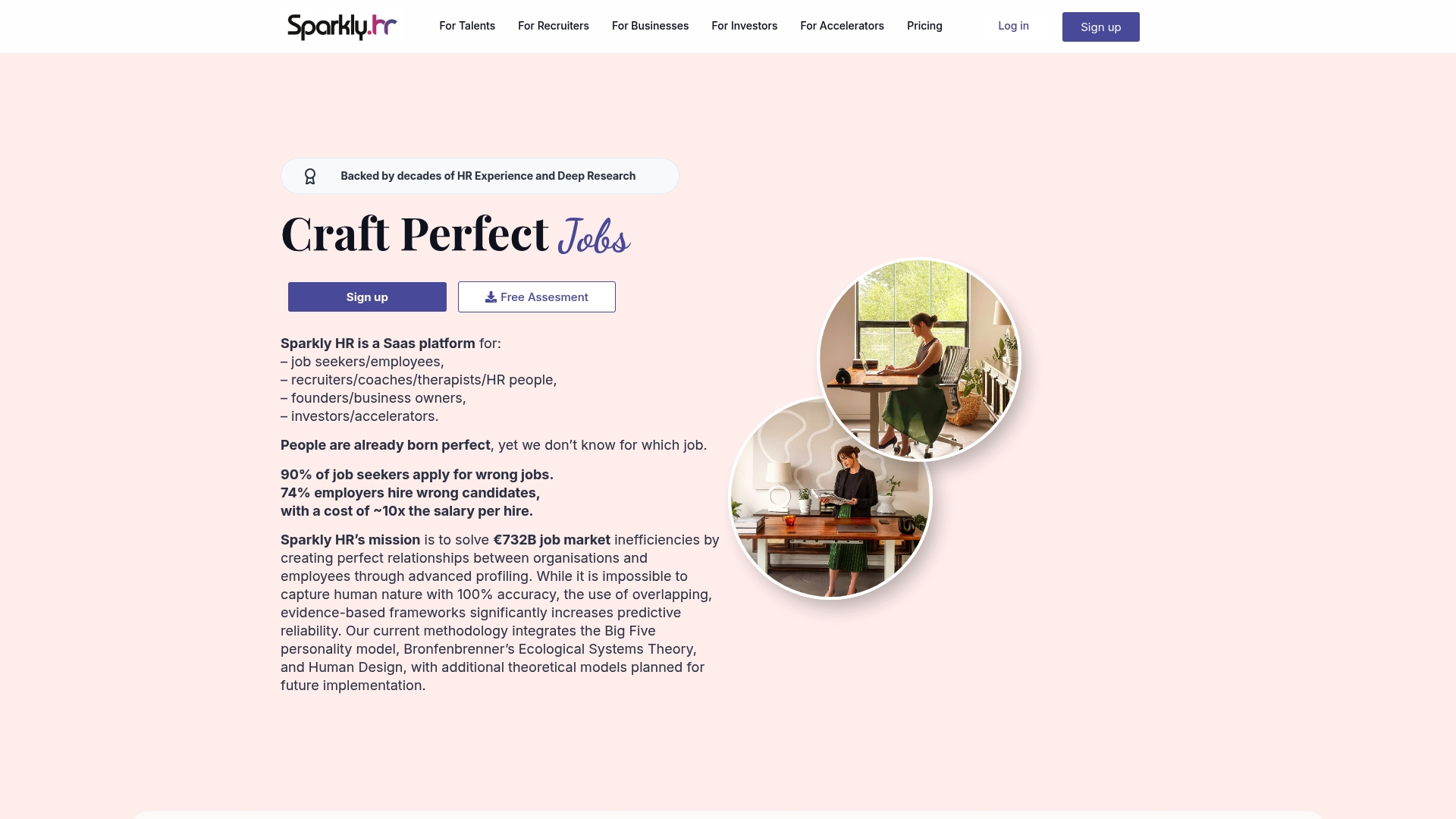
Sparkly is a people-intelligence SaaS that helps business leaders assess personality fit, team dynamics, and role alignment before making structural changes. Rather than relying on gut feeling or CVs, Sparkly merges psychometric assessments, Human Design, AI, and human input to surface high-probability insights about who belongs where. That means fewer costly mismatches when you shift reporting lines or create new roles. If you are preparing for a structural transition, explore how personality-driven team optimization can reduce friction and accelerate alignment. You can also review Sparkly’s full approach to unlocking employee potential through SaaS to see how data replaces guesswork in organizational design. âš¡ï¸
FAQ
What are the main types of organizational structures?
The four core organizational structure models are functional, divisional, matrix, and flat, with hierarchical design underlying most of them. Each model defines how teams are grouped, how decisions flow, and who holds authority.
What is the matrix organization definition?
A matrix organization is a structure where employees report to two managers simultaneously: one functional manager and one project or product manager. This dual reporting line supports cross-functional collaboration but requires strong role clarity and emotional intelligence to work effectively.
What are the advantages of flat structures?
Flat structures reduce management layers, which speeds up decisions and increases employee autonomy. They work best in small teams and startups but require deliberate role definition to remain effective as the company grows.
How does a functional organizational structure differ from a divisional one?
A functional structure groups employees by department or specialty, while a divisional structure groups them by product line, geography, or market segment. Functional structures build deep expertise; divisional structures enable faster, more focused leadership within each business unit.
When should a business change its organizational structure?
A business should review its structure when headcount, strategy, or market conditions shift significantly. Structural changes fail in over 50% of cases when performance and incentive systems are not updated at the same time, so plan both changes together.