
Skills Gap Analysis Checklist for HR Managers in 2026

TL;DR:
- A skills gap analysis checklist helps organizations identify and act on employee deficits to meet business goals.
- Regular review, clear ownership, and prioritization of high-impact gaps are essential for ongoing workforce development.
A skills gap analysis checklist is a structured tool that enables organizations to systematically identify, quantify, and act on employee skills deficits that stand between current performance and business goals. The industry term for this process is competency gap analysis, and the checklist format is what makes it operational rather than theoretical. For HR professionals and managers in mid-sized businesses, a well-built checklist tracks current state, desired future state, gap description, root cause, and assigned action items with KPIs to keep the process moving. Without those fields, you have a snapshot. With them, you have a management tool. âš¡ï¸
1. Key components every skills gap analysis checklist must include
An effective checklist does more than list missing skills. It creates a decision record that managers can act on, revisit, and update. Every operational checklist must include six core fields: current state assessment, desired future state, gap description, root cause analysis, action items with owners and KPIs, and a review date.
- Current state assessment. Use objective evidence, not impressions. Manager ratings, test scores, and work samples all outperform self-reports for accuracy.
- Desired future state. Tie this to a specific deadline and a business goal. “Proficient in data analysis by Q3 to support the new reporting function†beats “improve data skills.â€
- Gap description. Write it in plain business terms. “Cannot produce monthly variance reports without supervision†is more useful than “lacks analytical skills.â€
- Root cause analysis. Distinguish between a training gap, a process gap, and a strategic misalignment. Treating the wrong root cause wastes budget and time.
- Action items with assigned owners. Lack of ownership is the single most common reason talent development goals stall. Every action needs a named person responsible.
- KPIs and review dates. Define what success looks like in measurable terms, then schedule a review. Embedding review cadence transforms a static document into a live management tool.
Pro Tip: Limit your checklist to the six fields above. Adding more columns rarely improves outcomes. It usually creates forms that managers abandon after one cycle.
2. Step-by-step process to build and implement your checklist
A typical skills gap analysis runs through five to seven steps, from scope definition to KPI monitoring. Skipping any step produces incomplete data and weak action plans.
-
Define scope and success metrics. Decide which roles, teams, or functions you are analyzing. Set a measurable success metric upfront, such as raising average competency scores within six months. This anchors your ROI measurement from day one.
-
Build a skills taxonomy. Create a list of competencies aligned to each role. Group them by category: technical skills, soft skills, and leadership behaviors. Keep the list tight. Assessments capped at 15 competencies per role prevent analysis paralysis and produce cleaner data.
-
Measure current skills using multiple inputs. Combine self-assessments, manager ratings, and objective tests. No single source is reliable on its own. Validated assessment platforms built on millions of skill data points produce science-backed proficiency scores that outperform gut-feel ratings.
-
Score and visualize gaps. Use a consistent numeric scale, such as 1–5, across all raters. Plot results in a skills matrix with roles on one axis and competencies on the other. Color-code by gap severity so priorities are visible at a glance.
-
Prioritize gaps using impact and effort filters. Not every gap deserves equal attention. Score each gap by business impact and time-to-close, then rank them. Address the highest-impact, fastest-to-close gaps first.
-
Plan interventions with ownership and timelines. Assign each gap to a specific intervention: training, mentoring, job rotation, or external hiring. Name the owner. Set a deadline. Link the intervention to the KPI you defined in step one.
-
Monitor execution and measure results. Schedule monthly or quarterly reviews. Compare current scores against baseline. Adjust interventions that are not moving the needle.
Pro Tip: Run a calibration meeting with managers before finalizing scores. Calibration sessions align rating standards across raters and catch outliers before they skew your skills matrix.
3. Common pitfalls in skills gap checklists and how to avoid them
Most workforce skills audits fail not because the data is wrong, but because the process breaks down after the initial assessment. Knowing where the cracks appear helps you build a checklist that holds up over time.
- Treating the checklist as a one-time document. A gap analysis template completed once and filed away delivers no value. Regular review cadence is what separates a management tool from a compliance exercise.
- Focusing on symptoms instead of root causes. If a team consistently misses deadlines, the gap might be project management skills, or it might be unclear role boundaries. Diagnosing the root cause before prescribing training saves significant budget.
- Overloading the competency list. Assessing 40 competencies per role creates fatigue and inconsistent ratings. Cap the list at 15 competencies and use a uniform 1–5 rating scale to keep data aggregable.
- Missing ownership on action items. 78% of talent development goals lack assigned owners, which means they never get executed. Every action item needs a named person and a deadline.
- Attempting to close every gap at once. Spreading resources across all identified gaps dilutes impact. A prioritization framework forces the team to focus on what matters most right now.
The most valuable part of skills gap analysis is ongoing iteration through regular management reviews, not just the initial diagnosis. A checklist reviewed quarterly outperforms one completed annually by a wide margin, because the business environment changes and so do your people.
4. How to prioritize skills gaps for optimal business impact
Prioritizing gaps by severity, time sensitivity, and strategic alignment is the practice that separates high-performing HR teams from those that produce reports nobody acts on. The goal is not to close every gap. The goal is to close the right gaps first.

The most practical framework uses an impact × effort filter. Score each gap on two dimensions: how much closing it would improve business performance, and how much time and cost it would take to close. Gaps that score high on impact and low on effort are your immediate priorities.
| Gap type | Impact | Effort to close | Priority |
|---|---|---|---|
| Critical skill, short training time | High | Low | Address immediately |
| Critical skill, long training time | High | High | Plan with milestones |
| Non-critical skill, short training time | Low | Low | Address as capacity allows |
| Non-critical skill, long training time | Low | High | Deprioritize or hire externally |
Beyond impact and effort, factor in three additional variables. First, consider time sensitivity: a skill gap that blocks a product launch next quarter ranks higher than one affecting a project starting in 18 months. Second, assess internal bench strength. If you have employees close to proficiency, upskilling is faster and cheaper than hiring. Third, calculate time-to-train and cost-to-hire for each gap. Sometimes external hiring closes a critical gap faster than any training program can.
Balancing quick wins with long-term capability building is the art of this process. Quick wins build momentum and demonstrate ROI to leadership. Long-term investments build the capabilities your business needs in two to three years. A well-run talent mapping process keeps both horizons visible at the same time.
5. Tools and best practices to support checklist execution
The accuracy of your employee skills evaluation depends heavily on the quality of your measurement tools. Self-reported skills are notoriously unreliable. Validated, objective assessment tools built on large datasets produce proficiency scores that reflect actual job readiness, not self-perception.
- Use standardized numeric rating scales. A consistent 1–5 scale across all roles and raters makes aggregation possible. Without it, a “3†from one manager means something different than a “3†from another.
- Run manager calibration meetings. Bring raters together before finalizing scores. Calibration sessions surface rating bias and align standards across departments. This single practice significantly improves data quality.
- Build a skills matrix. Plot competency scores by role and employee in a grid. The matrix makes gaps visible at a glance and supports conversations with leadership about where investment is needed.
- Centralize data collection. Spreadsheets work for small teams. For mid-sized businesses with 50 or more employees, a centralized platform tracks scores, owners, KPIs, and review dates in one place. This prevents data from living in disconnected files.
- Incorporate personality-focused assessment strategies. Skills can be learned, but personality traits drive how quickly and consistently someone applies new skills. Understanding personality alongside competency scores gives you a fuller picture of each employee’s development potential.
- Schedule recurring reviews. Monthly check-ins on high-priority gaps and quarterly reviews of the full checklist keep the process alive. Without a calendar commitment, reviews slip and the checklist goes stale.
The role of assessments in HR transformation is shifting from annual events to continuous data collection. The best mid-sized businesses treat skills measurement as an ongoing practice, not a project.
Key takeaways
A skills gap analysis checklist delivers results only when it includes assigned ownership, measurable KPIs, and a recurring review cadence that keeps the process active beyond the initial assessment.
| Point | Details |
|---|---|
| Six core checklist fields | Include current state, future state, gap description, root cause, action owner, and KPI for every gap. |
| Cap competency lists at 15 | Shorter assessments produce cleaner data and higher completion rates from managers and employees. |
| Assign ownership to every action | Without a named owner, 78% of talent development goals go unexecuted. |
| Prioritize by impact and effort | Use a 2x2 filter to focus resources on high-impact, fast-to-close gaps first. |
| Embed review cadence | Quarterly reviews transform a static checklist into a live workforce management tool. |
Why most skills gap checklists collect dust after week one
I have worked with HR teams across mid-sized businesses for years, and the pattern is almost always the same. The initial assessment is thorough. The spreadsheet is well-organized. Then, six months later, nobody has touched it.
The problem is not the checklist. The problem is that the checklist was treated as the finish line instead of the starting point. A competency gap analysis is a decision instrument, not a report. The moment you complete it and file it, it starts losing value. The business changes. People change. The gaps you identified in january may not be the same gaps that matter in july.
What actually works is building the review cadence into the process before you launch the assessment. Put the quarterly review dates on the calendar before you collect a single data point. Assign owners before you finalize the gap list. Define KPIs before you plan the training. This sequence forces accountability into the structure of the checklist itself.
The other thing I have noticed is that teams spend too much time on the diagnosis and not enough on the prioritization. You will always find more gaps than you can close. That is not a failure. That is the reality of any growing organization. The skill is in deciding which three gaps to close this quarter, not in cataloging all 30. A personality-based approach to future skills also helps here. When you understand how someone is wired, you can predict which skills they will pick up quickly and which ones will require sustained investment. That changes your prioritization calculus entirely.
Focus on root causes, assign real owners, and review relentlessly. That is the formula.
— Mikk
How Sparkly supports your skills gap analysis process
Skills gap analysis works best when the data behind it is accurate and the people insights go deeper than a competency score.
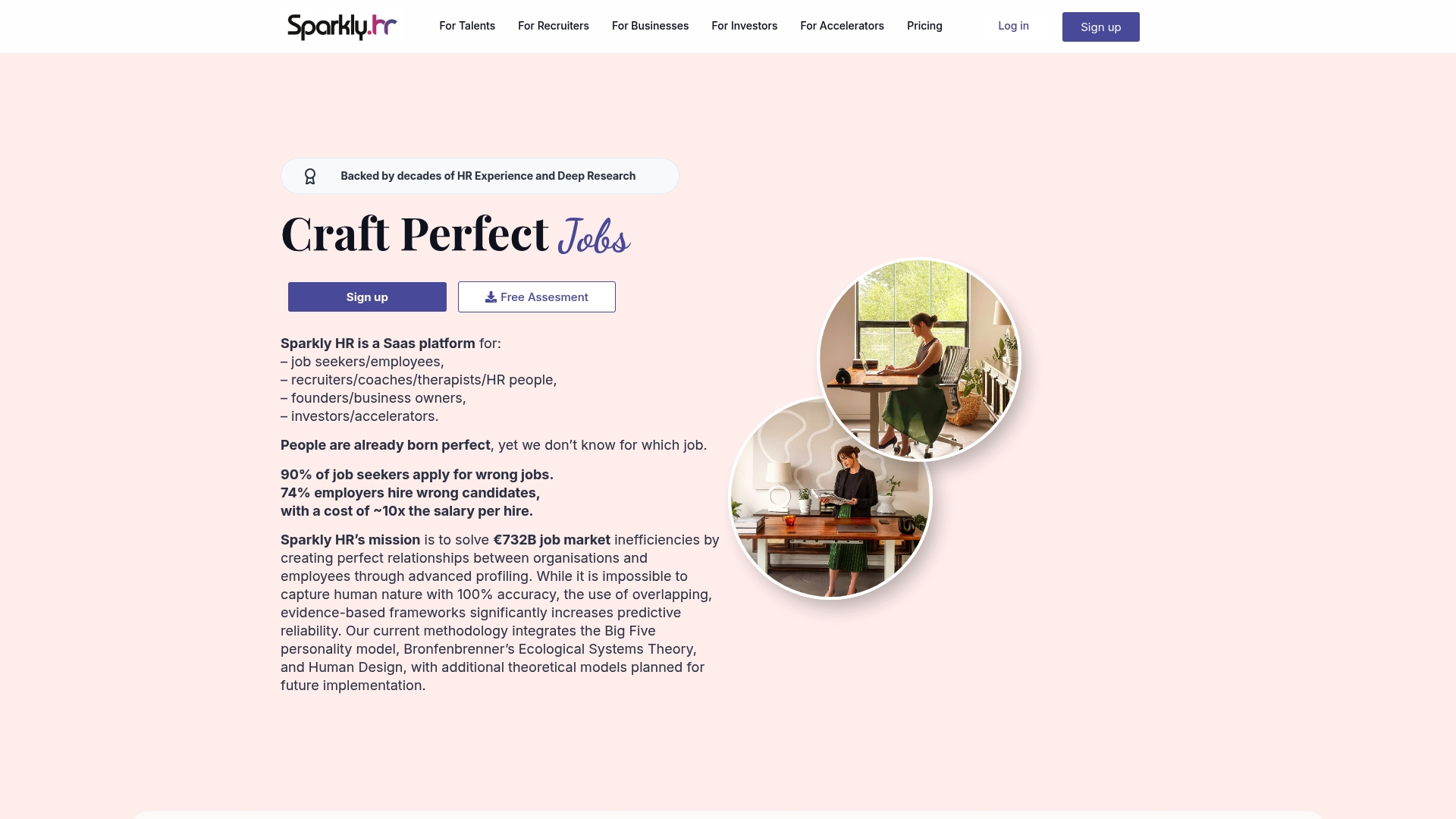
Sparkly is a people-intelligence platform built for exactly this challenge. It merges psychometric assessments, AI analysis, Human Design data, and human judgment to produce higher-probability insights about each employee’s real potential, not just their current skill level. Because skills can be learned, Sparkly focuses on personality first. This tells you who will close a gap quickly and who needs a different role entirely. HR teams using Sparkly can assign ownership, track KPIs, and embed review cadence directly into their employee potential evaluation process, turning a static checklist into a live workforce management system. If you are ready to move beyond spreadsheets, explore how SaaS tools are transforming HR for mid-sized businesses in 2026.
FAQ
What is a skills gap analysis checklist?
A skills gap analysis checklist is a structured document that tracks the difference between current employee competencies and the skills required to meet business goals. It includes fields for gap description, root cause, action owner, KPIs, and review dates to keep the process operational.
How many competencies should a skills gap checklist assess?
Limit assessments to 15 competencies per role and use a consistent 1–5 numeric rating scale. This prevents analysis paralysis and produces data that can be aggregated into a meaningful skills matrix.
How often should you review a skills gap analysis checklist?
High-priority gaps warrant monthly check-ins, while a full checklist review should happen quarterly. Regular cadence is what separates a live management tool from a document that collects dust.
What is the biggest mistake in skills gap analysis?
The most common mistake is failing to assign a named owner to each action item. Without ownership, the vast majority of talent development goals go unexecuted regardless of how thorough the initial assessment was.
How do you prioritize which skills gaps to close first?
Use an impact × effort filter. Score each gap by how much closing it improves business performance and how long it takes to close. Address high-impact, low-effort gaps immediately, and build milestone plans for high-impact gaps that require longer investment.