Psychological Insights for HR: A Practical 2026 Guide

TL;DR:
- Psychological insights like safety and Self-Determination Theory improve team performance and reduce burnout. HR must embed these principles into daily systems, not just hold one-time workshops or surveys. Building governance for AI hiring is crucial for legal compliance and better decision-making.
Psychological insights for HR is the practice of applying evidence-based psychological principles to talent management, hiring, and employee engagement. The field draws on frameworks like psychological safety, Self-Determination Theory (SDT), and validated assessment standards to help HR professionals make better people decisions. This guide covers the most impactful principles, the 2026 AI assessment standards from SIOP, and practical tools, including Sparkly, that translate psychology into measurable outcomes. If you want to reduce turnover, improve hiring quality, and build teams that actually perform, the research points to a clear path.
What are psychological insights for HR and why do they matter?
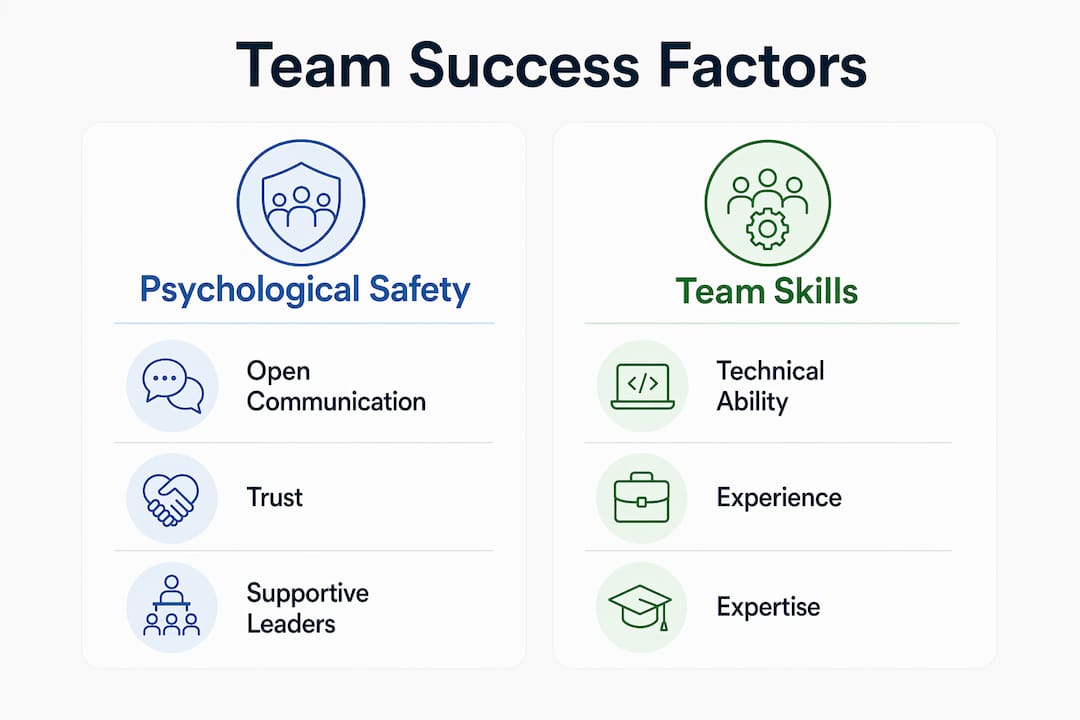
Psychological safety is defined as a shared belief that people won’t be punished for speaking up, asking questions, or flagging mistakes. Google’s Project Aristotle identified it as the single most important cultural condition for team effectiveness, ranking above individual talent, team composition, and even compensation. That finding reframes where HR should focus its energy.
Team outcomes rely more on the interpersonal climate than on who is on the team. This means that hiring the most skilled individuals does not guarantee performance. The environment you build around them determines whether their skills translate into results.
Organizational psychology in HR, the recognized industry term for this field, covers everything from motivation science to structured selection procedures. The psychological insights for HR guide you are reading applies that science to the decisions HR professionals make every week: who to hire, how to develop people, and how to keep them engaged.
How does psychological safety improve team effectiveness?
Psychological safety requires continuous, day-to-day leader behaviors to invite questions and respond supportively to mistakes and dissent. A single annual survey does not build it. It is built through repeated, small actions that signal to employees that speaking up is safe.
HR professionals can operationalize psychological safety through four concrete practices:
- Model vulnerability. Leaders who openly admit uncertainty or error set the tone for the whole team.
- Respond to dissent with curiosity. When someone raises a concern, the first response should be a question, not a defense.
- Protect those who flag problems. Punishing those who flag problems or sending inconsistent messages erodes safety faster than any other behavior.
- Build team routines that invite input. Structured retrospectives, pre-mortems, and open-floor meeting formats create regular opportunities for honest dialogue.
The HR role here is not passive. You design the systems that make these behaviors the default, not the exception. That means training managers on specific behaviors, not just values, and measuring psychological safety as a team-level metric on a quarterly basis.
Pro Tip: Treat psychological safety as a daily leadership routine, not a culture initiative. If your only measurement is an annual engagement survey, you are measuring the outcome, not the driver.
How does Self-Determination Theory reduce burnout and turnover?
Self-Determination Theory identifies three core psychological needs: autonomy, competence, and relatedness. A 2025 meta-analysis on SDT workplace outcomes confirmed that when managers support these needs, employees show higher engagement, better performance, and lower burnout. Controlled motivation, where employees act out of fear or external pressure, links directly to burnout and exit.

The practical implication is significant. Leaders must support autonomy, competence, and relatedness to reduce burnout. Perks and slogans are not substitutes. A free lunch does not address a manager who micromanages every task.
Here is how to translate SDT into manager behavior, step by step:
- Measure need support as behavior. Ask employees whether their manager explains the rationale behind decisions (autonomy), provides growth opportunities (competence), and shows genuine interest in their wellbeing (relatedness).
- Build manager scorecards around these behaviors. Include SDT-aligned behaviors in performance reviews for people managers, not just business metrics.
- Use pulse surveys to track need satisfaction. Short, frequent surveys that ask about autonomy, competence, and relatedness give you leading indicators of burnout risk before it becomes a resignation.
- Develop managers with behavioral coaching. Role-play scenarios where managers practice giving rationale, offering stretch assignments, and checking in on team members personally.
- Link SDT data to retention analytics. Teams with low need satisfaction scores should trigger proactive HR intervention, not a reactive exit interview.
To meaningfully reduce turnover using SDT, treat need support as a system of manager behaviors, not a one-time program. The difference between a company that runs an SDT workshop and one that embeds SDT into manager accountability is the difference between a fad and a retention strategy.
Pro Tip: Instrument need support as observable behavior, not a program name. If you cannot point to a specific manager action that supports autonomy this week, you do not have an SDT strategy. You have a slide deck.
What do SIOP’s 2026 standards require for AI-based hiring?
The Uniform Guidelines on Employee Selection Procedures provide a research-based framework for merit-based, defensible hiring. SIOP warns that rescinding these Guidelines without a replacement risks legal challenges and reduced workplace productivity. The framework is not bureaucratic overhead. It is the legal and ethical foundation for every selection decision you make.
SIOP’s 2026 AI assessment recommendations raise the bar further. AI hiring tools must meet traditional selection test standards with additional operational requirements specific to algorithmic systems. The core requirements include predictive accuracy, fairness across demographic groups, and full documentation for auditing.
| Requirement | Traditional selection | AI-enhanced selection |
|---|---|---|
| Predictive validity | Job-related test validation | Algorithm validation with ongoing monitoring |
| Fairness checks | Adverse impact analysis | Bias audits across demographic groups at each model update |
| Documentation | Validation study on file | End-to-end audit trail: data sources, scoring logic, fairness checks |
| Consistency | Standardized administration | Reproducible outputs with version control |
| Legal defensibility | Uniform Guidelines compliance | SIOP 2026 AI standards plus Uniform Guidelines |
Without documentation, verifying fairness and job-relatedness in AI deployments is difficult, raising legal and ethical concerns. Many HR teams underestimate the documentation burden. Building the audit trail after the fact is far more expensive than building it from the start.
Practical steps for HR teams deploying AI-assisted hiring:
- Require vendors to provide validation studies specific to your role types and candidate populations.
- Document every data source feeding the model, including resume parsing, video analysis, and psychometric inputs.
- Run adverse impact analyses before and after deployment, not just during vendor evaluation.
- Assign a named owner for AI assessment governance inside your HR function.
The role of AI in recruitment is expanding fast. The HR professionals who build governance structures now will avoid the legal and reputational costs that follow ungoverned AI deployments.
How do you integrate psychological principles into daily HR practice?
Psychological principles in HR produce results only when they move from theory into systems. The types of HR assessments that drive the most impact combine personality data, values alignment, cognitive fit, and team dynamics, not just skills testing. Skills can be learned. Personality shapes how someone shows up every day.
Sparkly takes this seriously. The platform merges four data sources: human judgment, AI analysis, psychometric assessments, and Human Design. Each source alone is unreliable. Combined, they produce higher-probability insights that HR professionals can use in interviews and role design decisions. The core premise is that people are not wrong. They are often placed in wrong roles.
Here is how to embed psychological insights into your regular HR decision cycles:
- Hiring: Use personality-first assessments to evaluate role fit before skills. A candidate who fits the role’s energy demands and working style will outperform a skilled candidate who does not.
- Development: Map each team member’s strengths and energy patterns to their current tasks. Redesign roles where there is a mismatch before the person disengages or leaves.
- Retention: Track burnout risk indicators continuously using pulse data tied to SDT need satisfaction scores. Intervene at the team level, not just the individual level.
- Restructuring: Use team-fit data to make role-shifting decisions based on psychological compatibility, not just org chart logic.
Pro Tip: Do not present psychological data to managers as a report. Present it as a conversation starter. A manager who understands why a team member is disengaging will act on that insight. A manager who receives a PDF will file it.
Platforms like Sparkly make employee potential evaluation continuous rather than episodic. The goal is not a one-time assessment. It is a living picture of how each person fits their role, their team, and the direction the organization is heading.
Key Takeaways
Psychological safety, Self-Determination Theory, and evidence-based selection standards are the three pillars of effective HR psychology, and all three require behavioral systems, not one-time programs, to produce lasting results.
| Point | Details |
|---|---|
| Psychological safety is behavioral | Build it through daily leader actions, not annual surveys or culture statements. |
| SDT reduces burnout when measured | Track autonomy, competence, and relatedness as manager behaviors, not program outcomes. |
| AI hiring requires audit trails | Document data sources, scoring logic, and fairness checks before deployment, not after. |
| Personality predicts fit better than skills | Skills can be learned; personality shapes daily performance and team dynamics. |
| Systems beat initiatives | Embedding psychology into manager accountability and HR cycles produces results that workshops do not. |
Psychology in HR is not a trend. It is the operating system.
I have watched organizations run psychological safety workshops, post SDT infographics on their intranet, and then measure success by how many people attended the session. That is not organizational psychology. That is theater.
The research from Google’s Project Aristotle and the SDT meta-analyses is not ambiguous. The mechanisms are clear. What is missing in most organizations is the willingness to treat psychological principles as operational requirements rather than cultural aspirations. Psychological safety does not appear because you value it. It appears because your managers behave in specific ways, every day, and you measure whether they do.
The 2026 SIOP AI assessment standards are a signal worth paying attention to. The organizations that build governance structures around AI-based hiring now are not just protecting themselves legally. They are building a hiring function that produces better data, fairer decisions, and more defensible outcomes. That is a competitive advantage, not a compliance burden.
My honest view: the HR professionals who will lead their organizations through the next decade are the ones who treat psychology as infrastructure. Not a workshop. Not a wellbeing program. Infrastructure. The frameworks exist. The tools exist. The only question is whether you are willing to build the systems that make them real.
— Mikk
Sparkly and the science of better people decisions
Applying psychological insights at scale requires more than good intentions. It requires data that is structured, comparable, and tied to real outcomes.
Sparkly combines psychometric assessments, values data, cognitive fit analysis, and Human Design into a single platform built for HR professionals who want to make better hiring and development decisions. The platform is designed around one idea: people are not wrong, they are often in the wrong role. Sparkly helps you identify that mismatch before it becomes a resignation. Whether you are redesigning roles, shifting team members, or evaluating new hires, explore SaaS tools for employee potential and see how personality-first assessment changes the quality of your decisions. You can also review the employee fit assessment guide to cut turnover costs with structured, data-driven evaluation. âš¡ï¸
FAQ
What is psychological safety in the workplace?
Psychological safety is a shared belief that team members will not be punished or humiliated for speaking up, asking questions, or making mistakes. Google’s Project Aristotle identified it as the top predictor of team effectiveness.
How does Self-Determination Theory apply to HR?
SDT identifies autonomy, competence, and relatedness as the three core needs that drive employee motivation. Supporting these needs through manager behavior reduces burnout and increases engagement more reliably than perks or incentive programs.
What do SIOP’s 2026 AI assessment standards require?
SIOP’s 2026 recommendations require that AI-based hiring tools demonstrate predictive accuracy, fairness across demographic groups, and complete documentation for auditing, including data sources, scoring logic, and validation evidence.
Why assess personality instead of skills in hiring?
Skills can be trained after hiring. Personality determines how someone processes feedback, collaborates with teammates, and handles pressure. Personality-first assessment predicts role fit and long-term performance more reliably than skills-based screening alone.
How can HR professionals reduce employee turnover using psychology?
Turnover drops when employees experience high need satisfaction at work. Measuring and improving manager behaviors that support autonomy, competence, and relatedness, combined with role fit assessments, addresses the root causes of disengagement before they become exits.