
Diversity Recruitment Step by Step: Your 2026 HR Guide

TL;DR:
- Structured diversity recruitment involves a systematic process of analyzing hiring gaps, removing bias from descriptions, expanding sourcing channels, and standardizing evaluations. It emphasizes measuring fairness at each hiring stage through conversion rate parity and setting realistic diversity targets. Success depends on leadership accountability, ongoing training, and organizational commitment to inclusive hiring as a long-term practice.
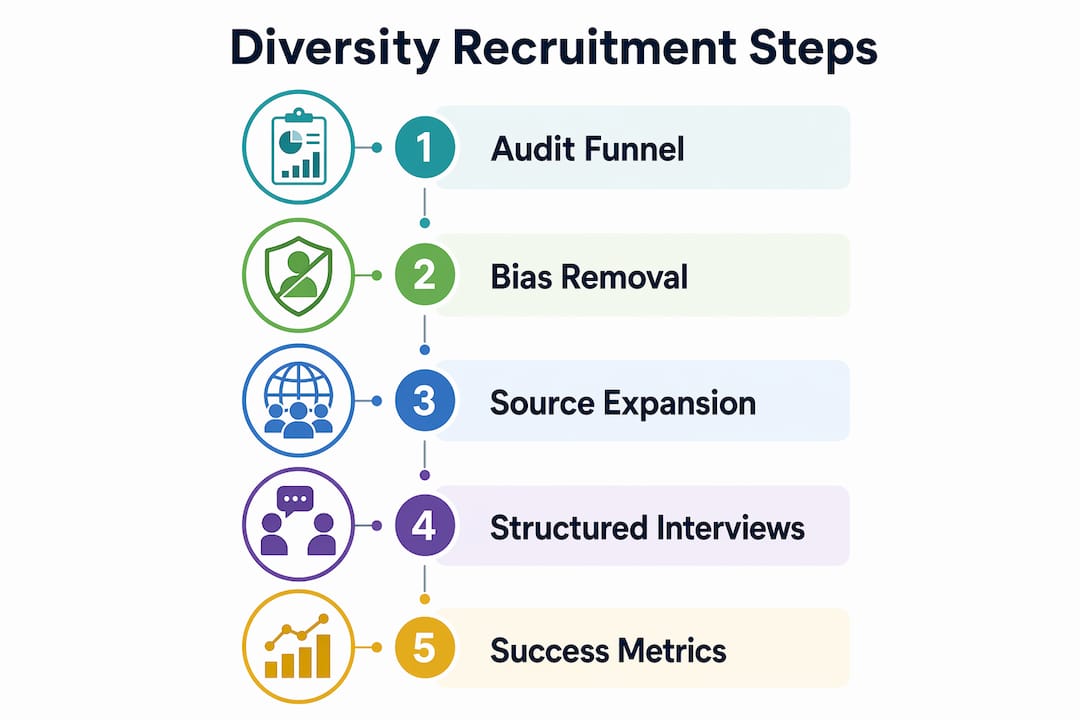
Diversity recruitment, defined formally as structured inclusive hiring, is a step-by-step process that helps organizations attract, evaluate, and hire qualified candidates from underrepresented groups through deliberate, evidence-based methods. Organizations with diverse teams show a 35–39% higher likelihood of outperforming industry peers. That number is not a soft benefit. It reflects real competitive advantage built through better decision-making, broader perspective, and reduced groupthink. The diversity recruitment step by step framework covered here includes five core stages: hiring funnel audit, inclusive job descriptions, diversified sourcing, structured evaluation, and data-driven measurement. Each stage builds on the last, and skipping one creates gaps that undermine the whole effort.
How to audit your hiring funnel for diversity gaps
The funnel audit is the foundation of any effective diversity hiring strategy. Without it, you are making changes based on assumptions rather than evidence.
A funnel audit tracks demographic data at every stage of recruitment: sourcing, screening, interviewing, and offer. The goal is to identify where underrepresented candidates drop out at higher rates than their peers. Tracking candidate flow by demographic at each stage is the most direct way to find structural leaks that produce diversity gaps.
Common leak points include:
- Sourcing: Relying on referrals from a homogeneous team produces a homogeneous pipeline.
- Screening: Keyword filters and degree requirements eliminate qualified candidates before a human ever reviews them.
- Interviewing: Unstructured conversations favor candidates who match the interviewer’s background.
- Offer stage: Pay gaps or inflexible terms cause disproportionate offer rejections from underrepresented groups.
To run the audit, pull your last 12 months of applicant data. Segment it by gender, race, disability status, and any other dimensions relevant to your organization. Calculate the conversion rate from each stage to the next, separately for each group. Where the gap between groups is largest, that is your highest-priority fix.
Pro Tip: Set a calendar reminder to repeat the audit every quarter. A single annual review misses seasonal patterns and lets problems compound before you catch them.
Why job descriptions drive away diverse candidates
Job descriptions are the first filter in your pipeline, and most of them are working against you. Biased language and inflated requirements shrink your applicant pool before a single person applies.
Removing non-predictive filters like unnecessary degree requirements reveals qualified candidates who were previously invisible. A bachelor’s degree requirement for a role that genuinely needs analytical thinking, for example, excludes capable candidates who built that skill through experience rather than formal education.
Write inclusive job descriptions by following these steps:
- Audit your language. Tools like Textio flag gendered or exclusionary phrasing. Words like “dominant,†“competitive,†and “aggressive†skew male in perception. Words like “collaborative†and “supportive†skew female. Neither set belongs in a job description unless the role genuinely requires that trait.
- Separate must-haves from nice-to-haves. List only the skills and experience that are truly required to perform the job on day one. Move everything else to a “preferred†section.
- Add salary ranges. Salary transparency reduces negotiation gaps that disproportionately affect women and candidates of color.
- Include an equal opportunity statement. Keep it specific. “We actively encourage applications from candidates with disabilities†signals more than a boilerplate EEO line.
- Specify flexibility options. Remote work, flexible hours, and part-time paths expand your reach to caregivers and candidates with disabilities.
Pro Tip: Have someone outside your team read the job description and note which type of person they picture in the role. If the answer is narrow, rewrite before posting.
Where to find diverse candidates beyond standard channels
Standard sourcing channels reproduce the same talent pools. LinkedIn, employee referrals, and a handful of university partnerships are not enough to build a genuinely diverse pipeline.
Effective sourcing for underrepresented candidates requires deliberate channel expansion. Inclusive recruiting is a quality improvement process, not a separate diversity project. Removing irrelevant barriers unlocks talent that was always there.
Channels that consistently reach underrepresented candidates include:
- HBCUs and minority-serving institutions: Build relationships with career centers, not just post jobs. Attend their career fairs and sponsor student events.
- Professional associations: Organizations like the National Society of Black Engineers, the Society of Hispanic Professional Engineers, and Out & Equal Workplace Advocates maintain active job boards and member networks.
- Bootcamps and alternative credential programs: Coding bootcamps, community college certificate programs, and apprenticeships produce job-ready candidates who lack traditional four-year degrees.
- Open source communities and GitHub: Technical roles benefit from reviewing public contributions, which reveal skill independent of credential.
- Community platforms: Slack communities, Discord servers, and local meetup groups organized around specific identities or interests reach candidates who are not actively job hunting.
Integrate every new channel into your applicant tracking system from day one. Tag each candidate’s source so you can measure which channels produce hires, not just applicants. A channel that generates 200 applicants but zero hires is not a success.
How to build a structured, fair candidate evaluation process
Unstructured interviews are the single biggest source of bias in hiring. When interviewers ask different questions to different candidates and score them on gut feeling, they consistently favor candidates who remind them of themselves.

Structured interviews with standardized questions and scoring rubrics are the most impactful single improvement you can make for equitable hiring outcomes. Every candidate answers the same questions. Every answer is scored against the same criteria. The process removes the interviewer’s personal narrative from the decision.
Build your structured evaluation process with these steps:
- Define competencies before you post the role. List the four to six behaviors that predict success in the position. Write interview questions that elicit evidence of each behavior.
- Create a scoring rubric. For each competency, define what a weak, acceptable, and strong answer looks like. Interviewers score independently before discussing.
- Assemble a diverse interview panel. Candidates from underrepresented groups perform better in interviews when at least one interviewer shares a similar background. Panel diversity also increases offer acceptance rates.
- Offer standard accommodations. Neurodivergent and disabled candidates perform better when the process includes accommodations like interview questions shared in advance and alternative communication options. Offer these to every candidate, not just those who ask.
- Calibrate after each interview round. Compare scores across interviewers. Significant disagreement on the same candidate often signals bias rather than genuine performance differences.
Blind resume review alone does not remove bias from job descriptions or interviews. Pair it with competency assessments and structured scoring to make it effective. Use real job-related tasks where possible. A work sample test predicts performance far better than a conversation about hypothetical scenarios.
Pro Tip: Record calibration scores in a shared document after every interview round. Patterns across multiple hires reveal which interviewers consistently score certain demographic groups lower, which is data you can act on.
What metrics actually measure diversity recruitment success?
Measuring success in steps for diverse recruitment requires more than counting diverse hires. The metrics that matter track fairness at every stage of the funnel, not just the outcome.
Conversion rate parity is the most important metric. It measures whether diverse candidates advance from each stage at the same rate as non-diverse candidates. A gap at any stage points to a specific process problem, not a pipeline problem.
| Metric | What it measures | Why it matters |
|---|---|---|
| Pipeline diversity rate | % of underrepresented candidates at sourcing | Shows whether sourcing channels are working |
| Conversion parity | Stage-by-stage advance rates by demographic | Identifies where bias enters the process |
| Diverse slate rate | % of roles with at least two diverse finalists | Measures structural commitment to inclusion |
| Offer acceptance parity | Offer acceptance rates by demographic | Flags pay or culture gaps affecting specific groups |
| Retention parity | 12-month retention rates by demographic | Confirms that hired candidates are succeeding |
Aspirational diversity hiring targets aligned with local labor market demographics are the best practice for goal-setting. Hard quotas carry legal risk and can undermine the credibility of your entire program. Set targets that reflect the available talent pool in your geography and industry, then assign a named owner to each target. Accountability without ownership produces reports, not results.
Collect candidate feedback after every process, including from candidates who declined offers or were not selected. Their perspective reveals accessibility and fairness gaps that internal data cannot show.
Pro Tip: Build a simple dashboard that shows funnel attrition by demographic in real time. When a stage shows a sudden drop-off for a specific group, you can investigate immediately rather than discovering it six months later in an annual review.
Key Takeaways
Effective diversity recruitment requires auditing your funnel, removing bias from job descriptions, expanding sourcing channels, standardizing evaluation, and tracking conversion parity at every stage.
| Point | Details |
|---|---|
| Audit before you act | Track demographic drop-off at each funnel stage before changing any process. |
| Rewrite job descriptions | Remove degree requirements and gendered language to expand your qualified applicant pool. |
| Expand sourcing channels | Partner with HBCUs, professional associations, and bootcamps to reach underrepresented talent. |
| Standardize evaluation | Use structured interviews with scoring rubrics and diverse panels to reduce interviewer bias. |
| Measure conversion parity | Track whether diverse candidates advance at equal rates to non-diverse peers at every stage. |
What I’ve learned about making diversity recruitment actually stick
The hardest part of implementing a diversity hiring strategy is not the process design. It is the organizational will to maintain it when it feels inconvenient.
I have seen companies build excellent structured interview frameworks and then watch managers quietly abandon them after two hiring cycles because “we just know a good fit when we see it.†That phrase is the single most expensive sentence in hiring. Culture fit, when left undefined, is a proxy for familiarity. It consistently reproduces the existing team rather than improving it.
The organizations that sustain real progress share one trait: leadership owns the metrics personally. When the CEO reviews conversion parity data in the same meeting as revenue numbers, the behavior of every hiring manager changes. When diversity recruitment is delegated entirely to HR with no executive accountability, it becomes a compliance exercise rather than a business priority.
The legal dimension matters too. Assigning explicit ownership for each component of the process, from job description review to interview calibration, creates the documentation trail that protects your organization if hiring decisions are ever challenged. It also creates the feedback loop that drives continuous improvement.
Process change alone is not enough. Training interviewers on structured scoring, educating hiring managers on how bias enters decisions, and building a culture where candidates from all backgrounds feel genuinely welcomed. These are not one-time events. They require ongoing reinforcement. The recruitment planning frameworks that work long-term treat inclusion as an operating standard, not a project with an end date.
— Mikk
How Sparkly supports data-driven, fair hiring decisions
Structured diversity recruitment produces a lot of data. The challenge is turning that data into decisions your hiring team can actually act on.
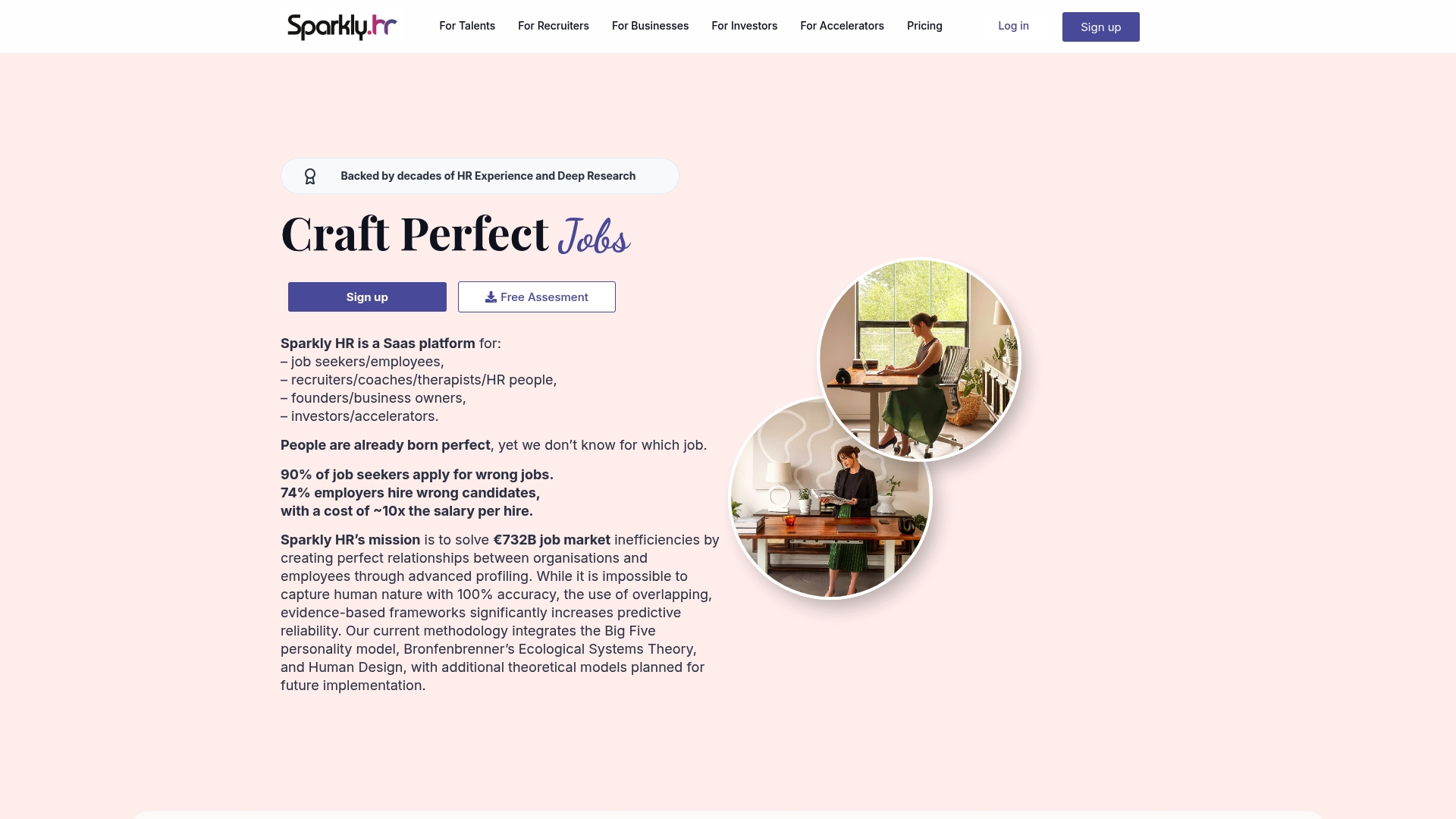
Sparkly is built for exactly this problem. The platform merges personality assessment, psychometric data, AI analysis, and Human Design to give HR teams higher-confidence insights about candidate fit. Rather than relying on gut feeling or a single assessment type, Sparkly combines four data sources to surface patterns that any one source would miss. For diversity recruitment specifically, that means evaluating candidates on personality and potential rather than credentials and surface signals. You can explore how SaaS transforms hiring quality and see how Sparkly’s personality-focused assessment approach reduces the mismatch that drives early turnover and costly re-hires. Skills can be learned. Personality fit is where the real prediction lives. âš¡ï¸
FAQ
What is diversity recruitment step by step?
Diversity recruitment step by step is a structured hiring process that includes a funnel audit, inclusive job descriptions, expanded sourcing, standardized evaluation, and data-driven measurement. Each stage addresses a specific source of bias or exclusion in the hiring process.
What is the most impactful change for equitable hiring?
Structured interviews with standardized questions and scoring rubrics are the single most impactful improvement for equitable hiring outcomes. They remove subjective judgment from evaluation and create a consistent, defensible process.
How do you measure diversity recruitment success?
Conversion rate parity is the primary success metric. It tracks whether diverse candidates advance from each funnel stage at the same rate as non-diverse candidates, revealing exactly where structural barriers exist.
Are diversity hiring quotas legal?
Hard quotas carry legal risk in most jurisdictions and can undermine program credibility. Aspirational targets aligned with local labor market demographics are the recommended best practice instead.
How do accommodations improve inclusive hiring?
Offering standard accommodations, such as sharing interview questions in advance and providing alternative communication options, improves performance and fairness for neurodivergent and disabled candidates. Offering them to all candidates removes stigma and improves overall process quality.